Total Pageviews

Tuesday, September 24, 2024

Reza Pahlavi, "My vision for a free Iran."


  Reza Pahlavi was only 18 years old and living in the U.S. when his father, The Shah of Iran was forced into exile, relinquishing the monarchy. It was a devastating day in 1979 for Reza and the people of Iran. Forty-five years later, Reza is still fighting, and speaking out for his compatriots in Iran, and he has a bold, new vision for their freedom.


   The sixty-three-year-old Crown Prince of Iran has a positive vision for a new and free Iran. As President of The National Council of Iran, he envisions a future where Iranians are no longer under a religious dictatorship but will have a democratic/secular government that respects human rights and has free and fair elections.  "There will be a separation between religion and state," Pahlavi explains, and "Iran will either be a constitutional monarchy or a republic. That decision will be left up to the people of Iran."

  Pahlavi is an outspoken critic of the present regime, calling them the "Number one state sponsor of terrorism and instability in the Middle East, through proxy wars carried out by Hezbollah, Hamas, and the Hooties of Lebanon." 

  In a recent interview with CBN (Christian Broadcasting Network), Pahlavi pointed out that "The current regime is weaker than ever and the country is ripe for revolution. "He went on to explain that 73% of the population of Iran is desperate for a new form of government. The mullahs are weaker than ever before and have lost their legitimacy in the eyes of the Iranians."

   When asked if the fight was becoming too much for the Iranian people, Pahlavi didn't hesitate to answer but boldly declared, "We have to fight. Iranians have no choice. They have to fight for survival, for their sanity, and for humanity, no matter what it takes!" He went on to criticize the Western nations for having false expectations that Iran's behavior would change, calling that kind of thinking, "false and deluded."

 "You don't recognize the DNA of this regime," Pahlavi pointed out, "That needs to do all that it does in order to survive. They are not interested in the welfare of the Iranians, but only interested in exporting their ideology to dominate the whole world!"

  In April of 2023, Reza Pahlavi and his wife Yasmine, traveled to Israel to rebuild their historic relationship with the Jewish people. The government of Iran has nothing but hatred for the people of Israel, threatening to wipe them off of the map. However, the people of Iran have a very positive friendship with the Jewish people and the Crown Prince met with Prime Minister Benjamin Netanyahu to re-emphasize that very important relationship. 


  Just a few days ago, Reza Pahlavi gave a very powerful speech at the Israeli-American Council Summit in Washington D.C. calling on Jews and Iranians to partner together in the fight against the Islamic Republic of Iran. Reza boldly declared:

   "It's time to say enough is enough. It is time to draw a red line. The only path to prevent more innocent victims and to bring peace for Israel, America, the Arab World, and my compatriots in Iran, is to send the Islamic Republic to the ash heap of history, once and for all."

  The audience replied with a standing ovation for the Crown Prince calling out the atrocities of Iran against their own people and the violent, unforgettable slaughter of the Jewish people by Hamas on October 7. After the rousing applause, Pahlavi continued by stating "The Iranians are fighting every day with no support from the outside world. They are not only fighting to free themselves but to free the Middle East and the world from the scourge of this evil regime."

  Pahlavi explained to the audience that the partnership that Iran and Israel currently have must go beyond social media posts, photo ops, and rallies. It must evolve into a coordinated and collaborated campaign to put maximum pressure on the Islamic Republic, to offer support for the people of Iran, so there can be a peaceful transition from a criminal dictatorship to a secular democracy.

   Reza Pahlavi has an optimistic outlook for the future of Iran but understands that freedom is not free and unfortunately will come with a cost of much blood and more violence. He ended his remarks at the summit with a reference to the original flag of Iran decorated with the lion and the sun. He gazed passionately into the eyes of the audience declaring, "When the Lion and the Sun rise again, the world will see a new dawn of peace."


Monday, September 16, 2024

"Tahirih, the first Persian woman to defy the Hijab Law in the history of Iran."

  If there is one important person in the history of Iran, that the "Woman, life, freedom" Movement can proudly claim as their forerunner, it's Tahirih. Tahirih embodied the courage to confront the traditional teachings of Shia Islamic theology. As a woman, she dared to question the religious norms of her day and bravely removed her veil publicly in defiance of the law.


  Tahirih (pronounced Tah Hooray) Qurrat-al-'Ayn was born Fatemeh Baraghani in Qazvin, Iran, between 1814 and 1817. Her exact birthdate is unknown. Her father was a respected scholar of Islamic Law and her mother was a recognized woman of Persian nobility. Tahirih was born into a high-ranking family of immense wealth and power. 

  Although her father lamented that she was not the son he wanted, he ensured that she was well educated. As a young child, she memorized the Quran and could easily articulate the finest details of religious law. Tahirih was permitted to listen to her father teaching other young males on the condition that she hid behind the curtain. She was forced to listen behind the curtain because it was considered "unbecoming" for a woman's face to be seen in public. Rising above the shame of being a woman, Tahirih demonstrated her intelligence by outperforming all of her father's male students. She embraced poetry and theology and very early on in her teenage years, Tahirih challenged the accepted interpretation of the Quran, by interpreting it in her own esoteric way. She never accepted the "what is" and always questioned the "what could be."

  Tahirih was recognized for her exceptional beauty and intelligence. She had a driving thirst for knowledge. At the age of 14, she was the unfortunate victim of an arranged family marriage and was forced to marry her cousin, Muhammad. She gave birth to three children leaving her very unhappy and desperate for more out of life than just being a stay-at-home mother.

 Thirsty for knowledge, Tahirih began following the teachings of Shaykhism, as taught by Siyyid Kaziim. Shaykhism taught that the last divine leader to appear in the end times was the Twelfth Imam, known st the Mahdi. The Mahdi, who is currently in hiding, will reappear in the end as a promised messiah to conquer the world for Islam. Tahirih realized that by embracing these beliefs, it would put her at odds with her family and yet she dared to defy the accepted norms.

  In 1843, she separated from her husband and was determined to meet Siyyid Kazim, but by the time she arrived at his home, he was dead.  Granted permission from his widow, Tahirih set up headquarters at Kazim's home and began teaching his followers. She understood that hiding her radical new beliefs from her family was the only way she would survive. In a very short time, she gained a wide and popular following, especially among women. The male clergy hated her and forced her to leave town.

In 1844, through correspondence, Tahirih discovered a very popular teacher known as the Bab, who would later become the founder of the Bahai faith. She became one of his respected followers and quickly began teaching his new doctrine, known at that time as "Babism." Her new beliefs caused her to be exiled to Baghdad by the government. She was fiercely hated by the conservative establishment and they were known to throw stones at her in public when she debated the clerics.

 After she returned to her hometown of Qazvin, her father demanded that she stop teaching her heretical doctrine, but Tahirih refused. Eventually, she was disowned by her own family and they began spreading false rumors to discredit her reputation. When her uncle was murdered, she was falsely accused and was imprisoned at her own home under house arrest. Her father believed in her innocence but Tahirih's husband wanted her executed. During her trial, the real murderer confessed to the crime and Tahirih was finally exonerated.


 In 1848, The Babi Faith held a major conference to explain the teachings of their movement. Tahirih attended and did the unthinkable. She declared that the Babi Faith needed to break free from Islam and in a show of defiance, she removed her veil. Tahirih did this in a room full of men. Many were outraged, screaming in horror, and one man cut his throat, quickly leaving the conference. The Bab publicly supported Tahirih's bravery, nicknaming her "Tahirih The Pure." 

 Tahirih continued to defy conservative beliefs, denouncing polygamy and refusing to wear her veil. The establishment was growing very afraid of her influence and the growing number of women leaving Islam. They denounced her as a heretic and demanded that she be executed. In 1852, Tahirih was arrested once again and sentenced to death. She spent her final days in prayer, meditation, and fasting.

  On execution night, she was taken to a garden in Tehran and strangled to death with her own veil. Her body was thrown into a well and stones were placed on top. Tahirih was just 35 years old. Her famous last words were, "You can kill me as soon as you like, but you cannot stop the emancipation of women."

  The "Woman, life, freedom" movement owes its uprising to a very courageous forerunner who stood up against the religious establishment of her day and defied their oppressive laws against women. Tahirih dared to question their authority and paid the ultimate price for standing up for her beliefs. The oppressive government of Tahirih's day hasn't changed. For more than four decades, the women of Iran have faced the same gender discrimination and violence that Tahirih faced. Yet they refuse to cower and remain silent. They have proudly taken the mantle of Tahirih upon themselves and refuse to back down. Her spirit lives on deep within their souls and nothing is going to stop them until the religious establishment crumbles underneath their feet!


Thursday, September 12, 2024

"The Woman, life, freedom Uprising: Two years Later."


  September 13, 2022, was a very exciting day for 22-year-old, Jina Mahsa Amini. She had just arrived with her brother in Tehran, anxious to visit her family. A few minutes after getting off the Tehran Metro she was greeted by the Morality Police and confronted for not wearing a proper Hijab. After a heated discussion, Jina was forced into a police van and ushered away to the Vozara detention Center. A few hours later, she was rushed to the hospital and pronounced brain dead, the result of severe blows to her head by a baton. Three days later, on September 16, Jina Mahsa Amini died in the ICU, igniting the largest uprising Iran has witnessed since the 1979 Revolution!

  For the next several months, security forces fired assault rifles, shotguns loaded with pellets, beat protesters with batons and used tear gas, resulting in the death of more than 500, including young children under the age of sixteen, and arresting tens of thousands. The "Woman, Life, Freedom" movement exploded in almost every city of Iran, consisting of men, women, and young children, expressing their outrage over the decades of oppression and gender-based violence. Two years since the death of Mahsa, the war on women has not diminished. The government has intensified its violent crackdown against women using surveillance cameras and carrying out floggings against hijab violators. 

  On January 6, 2024, Roya Heshmati received 74 lashes as a brutal punishment for not wearing her hijab. A few months later in July of this year, 31-year-old, Arezoo Badri was shot by security forces while driving away in her car and for refusing to pull over. Her license plate had been photographed and flagged as a hijab violator. She remains in the hospital paralyzed from the waist down.


   Diana Eltahawy, Amnesty's International Deputy Director, pointed out, that in the past two years, "Iranian authorities have been waging a propaganda campaign of denial and distortion to conceal evidence of their crimes and attempting to intimidate survivors and victims' families into silence." To further intensify their oppression of women, they launched a new campaign in April 2024, entitled the "Noor Plan." This plan calls for increasing security patrols on foot, motorbike, car, and police vans in public spaces to enforce compulsory veiling.

  In August of 2024, a disturbing video circulated on social media, showing multiple agents violently assaulting two 14-year-old girls after they removed their headscarves. One of the victims, Nafas Hajisharif described the violent encounter she had with the security forces.

  "They were pulling me by the hair, shouting at me and cursing. When they took me inside of the van, they threw me onto the floor. One female agent hit me, put her knee to my throat, and hit my head hard. My head was stuck between the seats, and they were kicking the side of my torso."

   This deadly assault against women is punishment for daring to claim their human rights of freedom of expression. Women are targets of an out-of-control dictatorship government in a male-dominated culture where they are treated like animals and second-class citizens.

   However, in the past two years, these brave and determined women have refused to comply with the Ayatollahs or Mullahs. They take to the streets without their veils giving the government the middle finger and saying no to the Islamic Republic's tactics of oppression. Risking violence, arrest, imprisonment, and torture, Iranian women continue to defy the law, standing firm for their rights and freedom. They have paid a great price for their defiance and courageously continue the great uprising of 2022. 

   Maryam, a young 16 year-old high school student, living in the Khuzestan Province of Iran, recently gave an interview to the Center for Human Rights In Iran, recalling the early days of the uprising, and why she continues to fight for her rights.

  "I was a student at middle school during the protests. When News of Mahsa's killing spread, we were all angry! Every day, the school staff came to work in fear of the students. We wrote, "Woman, life, freedom" on the doors and the walls, covered the washrooms with red paint, and drew protest signs."

  Maryam goes on to describe the consequences of their actions. "Nobody covered their hair in the classroom anymore. We would gather in the yard and sing protest songs. They would tell us to shut up, but we refused. They lowered our grades, summoned us to the office, or ordered our parents to come to the school and make pledges of obedience. But we weren't afraid! Whenever we could, we also wrote slogans and posted pictures of Mahsa on the walls outside the schools."

 Maryam finished her interview by describing their newfound courage and looking ahead to their future living in Iran.


  "After what happened to Mahsa, public support for women increased. People's courage increased, and their clothing as well as their thoughts changed. Iran's future is unclear. We will defend our rights as long as we can, but liberation is not easy."

 The government believed that after the massive crackdown the "Woman, life, freedom" movement would somehow quietly go away. Nothing could be further from the truth. These brave Iranian women, like Maryam are not quietly going away into submission. They are fearlessly standing up to the Supreme Leader and with one loud voice proclaiming, "Woman, Life, Freedom!"

  Two years later, they haven't forgotten the unjust murder of Jina Mahsa Amini, or any other peaceful protester that has given their life for human rights and freedom. This dictatorship government has unleashed a "female monster" that refuses to back down or comply. The cracks in the foundation of this evil regime are growing larger and it's only just a matter of time before it crumbles. Bravo to the incredible women of Iran who put to shame the silent and hypocritical feminists of the world that refuse to raise their voices of support!

Tuesday, September 10, 2024

"I can breathe again," Maral's new life in Germany.


It is the passion of my life to be a voice and write the stories of my Iranian friends. Maral Rostami is one of those dear friends. I met her online in Shiraz, Iran in 2013 and offered to help her learn English. We became very close friends and she appreciated my support of Iranian women's struggle of living under a dictatorship government. I distinctly remember a very emotional video call on Skype in July 2015. Maral was extremely desperate to flee Iran with her ten-year-old child. Her ex-husband was stalking her and her father-in-law was threatening to take custody of her son because she refused to teach him the Quran. It was would be the last time that i saw Maral for several months. 

The following short story of Maral's daring escape from Iran is told in more detail in my book, "Finding Hope and a Future: Maral's Journey to Freedom," on Amazon.com


 "For I know the plans I have for you," declares the Lord, "plans to prosper you and not to harm you. Then you will call upon me and and pray to me, and I will listen to you. You will seek me and find me when you seek me with all your heart."

                                                       (Jeremiah 29:11-13)


 I was sitting in the parking lot of Walmart on October 6, 2015, when I received a text message from Maral's sister, Farzane on What's App. I hadn't heard from Maral since our Skype call in July and was very concerned about her. I thought it was quite odd that her sister was messaging me. I quickly opened up the message and was shocked! Farzane explained in her message that Maral and her son Parham had to immediately leave Iran because the Police had arrived at her home while she was at university. Maral had noticed them parked at her home and she panicked, calling her brother. Within a few hours, her brother Mohammed had found a buyer for her car and used the money to smuggle Maral and Parham out of Iran to the border of Turkey.

 Upon hearing the news, I laid my cell phone down beside me in the car and quietly prayed for Maral, that God would protect her and lead her safely into another country. I knew the cyber police monitored Maral's Facebook page and was worried that they had discovered our friendship and found out that I was a human rights activist for Iranians. Then I remembered that Maral had shared with me that she belonged to an anti-government group that met together after classes at the university. Had the group recently been infiltrated and that's why the police were at her home? Farzane had mentioned that the police had confiscated her laptop and were patiently waiting for her to return home from university.

 For the next three months, Maral and Parham traveled with a refugee group on a grueling three-thousand mile journey to Germany, where they would become asylum seekers. The journey began on foot, crossing over the treacherous Zagros Mountains on foot. Once they reached the bottom, they were met by two pickup trucks that would transport them to the next location. One of the most challenging episodes on the journey for Maral and Parham was crossing the Aegean Sea on a leaking rubber raft, and arriving at a refugee camp on Samos Island in Greece. Struggling to adapt to the changing weather conditions, Maral was now suffering from a bad case of bronchitis. However, she didn't have time to rest and relax. She had to keep moving swiftly with the refugee group and avoid being seen by the police. If caught, they would all be deported back to Iran as illegal refugees.

 Suffering from lack of sleep, Maral and Parham finally arrived at their destination in Bad lburg, Germany on December 27, 2015. The long and difficult journey was now over and freedom never tasted so good! Iran was now far behind them and Maral and Parham were ready to begin a new life. I will never forget the day at work when I received a call from Maral on What's App. I was thrilled to hear her voice once again and even more thrilled when she told me that she had become a Christian. During our last Skype call in July, I shared with her a verse from the Bible that had made a powerful impact on her journey. The verse was from the book of Jeremiah, where God promised "hope and a future" for those who would seek his face and place their trust in Him. Maral also reminded me of another verse that I had shared with her from Matthew's gospel teaching on prayer where Jesus said, "Keep on asking and you will receive what you ask for. Keep on seeking and you will find. Keep on knocking and the door will be opened." 


  "Those Bible verses gave me hope," Maral explained. "It made the difficult journey much easier and I remembered them from our Skype call."

  Maral told me several times that she hated religion, but just believed in God. I responded that Christianity was not a religion but a love relationship with God through Christ. The seeds of God's Word had taken root in her heart and God had caused the seeds to grow through many trials and tribulations. Shortly after her arrival, Maral joined a nearby Lutheran Church, where she confessed Jesus as her Lord and Savior and was baptized.

 In January 2017, I met with Maral on Skype from her new home in Germany, and for the next three months, she explained in detail her incredible escape from Iran and the difficult journey with the group of refugees. One of the most exciting events of her new life in Germany, besides becoming a Christian, was when the elder at the church gave her a very special birthday present, a brand-new bicycle! Maral was thrilled and immediately took her new bike for a ride around the refugee camp. The exhilarating feeling of not having to wear a hijab and riding a bicycle was the thrill of her life. Women riding bicycles publicly in Iran is forbidden, but right now Maral could fearlessly pedal her bike around the camp without fear of being arrested by the Morality Police.

  "I can breathe again," Maral rejoiced with a huge smile on her face as she concluded her story with me on Skype.

  Next year, I will publish a sequel to our first book, detailing the struggles and triumphs of being an Iranian refugee in Germany. Since her new life, Maral has successfully graduated from university and is working as a dental assistant in her new apartment in Bad lburg. God has answered my prayers and kept His promise to Maral. She has been blessed with a brand new life and a new beginning. Maral and Parham both found hope and a future just as God had promised them!


Monday, September 2, 2024

"The suppression of artistic freedom in Iran."


    She is bold, passionate, and very talented. Pushing back her curly black hair from her eyes, 29 year-old, Zara Esmaeili belts out the lyrics of Amy Winehouse's rhythm & blues ballad, "Back to black" to passengers on the Tehran Metro. Later in the evening, you will find her standing at a street corner passionately singing Radiohead's cultural classic, "Creep" to young people out for a stroll. Wherever she sings, this Iranian street singer brings her listeners a few moments of joy and happiness, helping them escape from their oppression and despair.


    On July 22, 2024, the evil Iranian Regime pulled the curtain down on Zara's street performance and silenced her. Her crime was singing publicly without wearing a hijab, a major no-no if you live in Iran. Since the 1979 Revolution, women have been forced to wear a hijab publicly and forbidden to raise their singing voices. Artistic freedom is an oxymoron in Iran. According to Islamic law, music is haram or forbidden, because of its corrupting influence on the religious path of a Muslim. The female singing voice has been deemed as provocative and sexually suggestive and therefore tempting to the male. A good Muslim woman must stay at home and birth babies instead of singing publicly. Zara's music videos on Instagram had been going viral and probably caught the attention of the cyberpolice. 

 The crackdown on artistic freedom in Iran is just one more example of a dictatorship government controlling the lives of its people from the cradle to the grave. Since her arrest on July 25, Zara's family has not been informed of her whereabouts, leaving them in a panicked state for her well-being. Rumors are that she is being held at a detention center in Tehran, but the regime refuses to reveal her location. In many instances, women like Zara that are detained end up being beaten and raped by their interrogators.


   This evil regime is terrified of women. They are especially terrified of women who are bold, talented, and unafraid of the government. Faravaz Farvardin, the founder of the Berlin-based "Right to Sing Campaign" has condemned the arrest of Zara Esmaeili declaring that there is no legal basis for banning female singers. She explained, "This is the Islamic Republic's broader strategy to suppress dissent and enforce gender segregation."

  Suppressing artistic freedom is a favorite tactic of the Islamic Republic of Iran. They are hell-bent on silencing every artist who would dare use their musical talents to speak out against the government. One such example is that of Toomaj Salehi, a 34-year-old hip-hop and rap artist. Toomaj was arrested in October of 2022 during the Woman, life, freedom Uprising, for confronting the regime with his protest songs. Last April, he was sentenced to death, but his sentence was quickly overturned due to pressure from human rights organizations all over the world. In July of 2024,  Iranian singer-songwriter, Shervin Hajipour, began serving his four-year sentence for his song "Baraye" which became a worldwide anthem for the female-led uprising. The government claimed that Shervin's song was responsible for inciting people to "kill and fight."


  For now, the subways and streets are silent from the passionate sounds of Zara bringing laughter and joy to people. There can't be any joy or happiness in Iran. That too is forbidden. Day and night, one must mourn for the prophet Mohammed, read their Quran, and say their prayers. A culture of joy and laughter is frowned upon. Iranians must prepare for the return of the Mahdi, the day when Jesus returns to convert the world to Islam. Now isn't the time for frivolity or laughter. Women like Zara are a threat to religious traditions. They are idols that must be smashed and silenced. The war on women in Iran continues and the world of feminists is silent, refusing to be a voice for courageous women like Zara.

Tuesday, August 27, 2024

"Unafraid and unashamed," The incredible growth of Iran's underground church.


  In one of the most dangerous countries in the world to be a Christian, Iran has one of the fastest-growing underground churches. Christianity is illegal in Iran. Yet, despite facing imprisonment, torture, and execution, millions of Iranians are forsaking Islam and converting to Christianity. One unidentified Iranian church leader from the documentary film, "Sheep Among Wolves," directed by Dalton Thomas, declares:


  "What if I told you Islam is dead? What if I told you that the mosques are empty inside Iran? What if I told you no one follows Islam inside Iran? Would you believe me?"

    In the past several years, it has been widely reported that more than 50,000 mosques have closed their doors. There is a huge spiritual vacuum among Iranians and most Muslims are discovering who Jesus is through Mohabat TV, a 24-hour Farsi Christian satellite TV network that is beaming gospel programs into Iran. According to Open Doors International, more than 1.2 million believers in Iran are risking their lives and taking a stand for Jesus despite being arrested, put in solitary confinement, and tortured for their new-found faith. Back in 2005, then-President Mahmoud Ahmadinejad boasted that he would "stop Christianity in Iran." However, the promise of Jesus has triumphed over the boast of Ahmadinejad. Jesus declared,

"Upon this rock, I will build my church and the gates of hell shall not prevail against it." (Matthew 16:18)

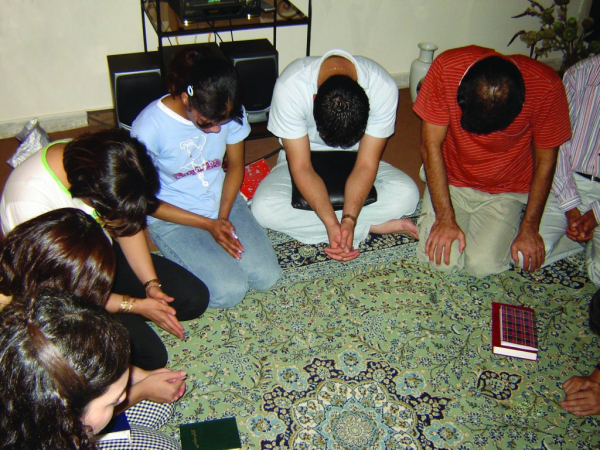
 What is so unique about Iran's "Christian awakening" and why it has exploded into the "fastest growing church in the world" is not because of loud rock concerts, pastors with seminary degrees, or well-planned events! In fact, it does not look like Western churches at all. These are average, hungry, and thirsty Muslims who have become disillusioned with the oppressive religion of Islam and are seeking something better! They gather together in small house church settings to read scripture, worship, and pray, What is even more unique about this movement is that it is being led by Iran's outcasts and downtrodden, and most of the leaders are women!

    Iran is very unkind to women. It is one of the most oppressive places on the planet for females. They are treated like second-class citizens and it is no wonder that in God's perfect wisdom, He has called these oppressed females to be the bold and powerful leaders of house churches. The task of these house church leaders comprised mostly of women, is to make disciples of all new converts. There is no feminist agenda among the women. They simply love Jesus and because of their obedience amidst persecution and oppression, God has exalted them, giving them great strength and courage. They are not afraid of being thrown into prison. They courageously share the gospel fully understanding the risks and the consequences of their actions. 

Lela Gilbert, award-winning author and senior Fellow for Religious International Religious Freedom, describes a typical house church meeting, in her article, "Good News from Iran, A Million New Christian Believers,"


 "These house churches are usually comprised of no more than 10 to 15 believers. On a given day, they arrive, one by one, at a small apartment or some other nondescript location. After the last one enters, the door closes and locks, and they all take a deep breath and relax, greeting each other warmly.

 A few minutes later, the little gathering begins to sing — very softly, accompanied by a quietly strummed guitar. They are cautious, not wanting their voices to be heard beyond the apartment’s thin walls. But soon, with closed eyes and hands lifted heavenward, they are lost in praise and worship music. Later a teaching from a biblical passage is offered and a communion service takes place. And finally, after more conversation they leave, one by one."

 However, not all house churches go as smoothly as the one described in Lela's article. There are many times that security forces burst through the doors, tearing apart the residence, searching for laptops, phones, evangelistic publications, including Bibles, books, and DVDs. The members, including the leaders, are all arrested and charged with "acting against national security, Insulting Islam, or conducting a deviant activity." These brave house church members are fully aware of the aftermath and consequences of the raid. They can suffer the loss of employment, expulsion from school or university, be estranged from family members, and sentenced up to ten years in prison. Yet they are willing to count the cost of following Jesus and pay the price! These hungry and thirsty ex-Muslims take seriously the claims of Jesus when he said:

   "I am the bread of Life: Whoever comes to me shall not hunger, and whoever believes in me shall never thirst."  (John 6:35)


   The next time that you read or watch a special report about Iranians chanting "death to America" or stomping down a burning American flag, remember there is another powerful story that the mainstream media refuses to report on. That story is the story of courageous Iranians who have found their hope and freedom in Christ. I tell their stories every Monday and Thursday on my Blog Talk Radio podcast, "The Cross in the Desert: Speaking Hope and Freedom to Iran."

   It is the passion and pleasure of my life to write the stories of Iranian refugees in my self-published books. As a Christian, I am awestruck at their courage and commitment to Christ. The Western church can learn so much from their willingness to sacrifice everything for Jesus. They are unafraid and ashamed! That's exactly who the underground church in Iran is. They are sheep among wolves and understand exactly what Jesus meant when he declared:

  "If anyone wishes to come after me, he must deny himself and take up his cross daily and follow me." (Luke 9:23)

   Let's remember our brothers and sisters in Iran when we awake on Sunday, feeling lazy and have a hard time getting out of bed to go to church. Let's stop playing church, get out of our comfort zone, and fall on our knees, and pray for Iranian Christians. They don't have padded pews and the latest audio-visual technologies that most modern churches have. But what they do have is uncompromising courage and a fiery passion to preach the gospel in one of the most dangerous countries in the world to be a Christian!


Tuesday, August 13, 2024

Arezoo Badri, "Left paraplegic after being shot by police for hijab violation."


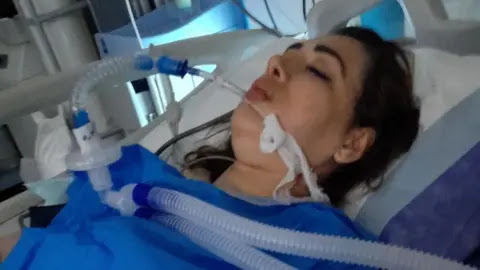
    July 22 2024, began like a normal, ordinary day for 31-year-old Arezoo Bardi, but a few minutes after 10 pm, it ended in a nightmare. Arezoo was driving home with her sister in the northern city of Noor, when she was suddenly intercepted by police. They ordered her to pull her car over, but Arezoo panicked, failed to comply, and continued driving. Immediately, the officers opened fire on her vehicle, one bullet striking the tire, and the other bullet piercing her lung, severely damaging her spine. Arezoo was rushed to a nearby hospital in a coma suffering from serious lung and spinal cord injuries. July 22 2024, began like a normal, ordinary day for 31-year-old Arezoo Bardi, but a few minutes after 10 pm, it ended in a nightmare. Arezoo was driving home with her sister in the northern city of Noor, when she was suddenly intercepted by police. They ordered her to pull her car over, but Arezoo panicked, failed to comply, and continued driving. Immediately, the officers opened fire on her vehicle, one bullet striking the tire, and the other bullet piercing her lung, severely damaging her spine. Arezoo was rushed to a nearby hospital in a coma suffering from serious lung and spinal cord injuries.

    Ten days later, doctors were able to finally remove the bullet from her back but gave her little hope of ever walking again. She is completely paralyzed from the waist down with no sensation or feeling. Arezoo was transferred to The Vali-e-Asr Hospital in Tehran and placed under strict security supervision, allowing family members only a few minutes of visitation time. Her Instagram account was deactivated to prevent any images from being published to the media.


     Apparently, Arezzo's car had been identified by CCTV cameras and was on the impoundment list for hijab violations. Last year, a major government clampdown took place targeting women defying the compulsory dress code. CCTV cameras were implemented to identify female drivers failing to cover their hair, resulting in the confiscation of their vehicles. Human rights activists in Iran speculated that Arezoo was probably filmed driving with her head uncovered and an alert was placed on the license plate number.


    It's almost been two years now since the brutal death of Mahsa Amini, a young 22-year-old Kurdish girl, taken into custody at the Tehran Metro for showing too much hair. A few hours later, she was hospitalized in a coma after being brutally beaten while in custody. Her death, a few days later, ignited the largest uprising in Iran, which became famously known as the "Woman, life, freedom" movement. Many Iranians falsely believed that there would be drastic changes in the policies of the morality police after the uprising, but unfortunately once again, on October 1, 2023, a young Iranian girl was rushed to the hospital after suffering a severe head injury during a confrontation with police at the Tehran Metro. A month later, seventeen-year-old, Armita Geravand died after being in a coma.

   Women are no longer safe in Iran. They are being targeted for the crime of not covering their hair and the rest of the feminist world remains silent. There is no outrage, no speaking up by the feminists of the world. Their silence is both hypocritical and offensive. The late Lutheran Pastor, Dietrich Bonhoeffer who was executed by the Germans, because of being involved in a plot to assassinate Hitler, is credited with a brilliant quote on the sin of being silent. His quote is an appropriate response to the feminist world.

    Silence in the face of evil is itself evil. God will not hold us guiltless. Not to speak is to speak. Not to act is to act."


     September 13 will be the two-year anniversary of the brutal death of Mahsa Amini. How many more Iranian women have to die until this government is held accountable for their gender apartheid sins? For more than 45 years, since the Iranian Revolution, women have been oppressed and treated like second-class citizens. They are prohibited from riding bicycles, attending sports events at stadiums, singing publicly, and going out without the veil.

     Iran is one big prison! They have no freedom. The government controls their bodies and their minds from birth to death. Yet inspite of the pressure and restrictions, these brave Iranian women put the rest of the world to shame. They are not afraid of this dictatorship government. They refuse to be kept in misogynistic chains and bravely confront this evil regime right out on the streets.

   I am praying that one day soon Arezoo will overcome her paralysis and be able to walk again. Her children are traumatized! They need their mother to be healthy again. If by the grace of God, Arezoo can one day walk, I believe she will not become a recluse and hide from the government in the safety of her home. If I know anything at all about the courage of Iranian women, Arezoo will go right back on the streets again to defend her "God-given" rights as a woman. Amidst the pathetic silence of the rest of the feminist world, Arezoo will not back down. She will rise again and demand her freedom!